Production begins only after the commercial scope and production information are clear. A controlled workflow helps buyer and manufacturer settle decisions before they become expensive changes on the factory floor.
The buyer visible control points
| Stage | Buyer or project confirmation | Factory record |
|---|---|---|
| Drawing approval | Dimensions, opening, finish, glass, hardware and quantities | Approved production drawing and scope |
| Material preparation | Any approved substitution or final change | Order-specific bill of materials |
| Fabrication and assembly | Clarification where the approved record is incomplete | Traceable item and process references |
| Inspection | Agreed inspection scope and unresolved items | Applicable inspection records |
| Packing and dispatch | Transport method, labels and delivery responsibility | Packing list and shipment information |
1 Scope and drawings are confirmed
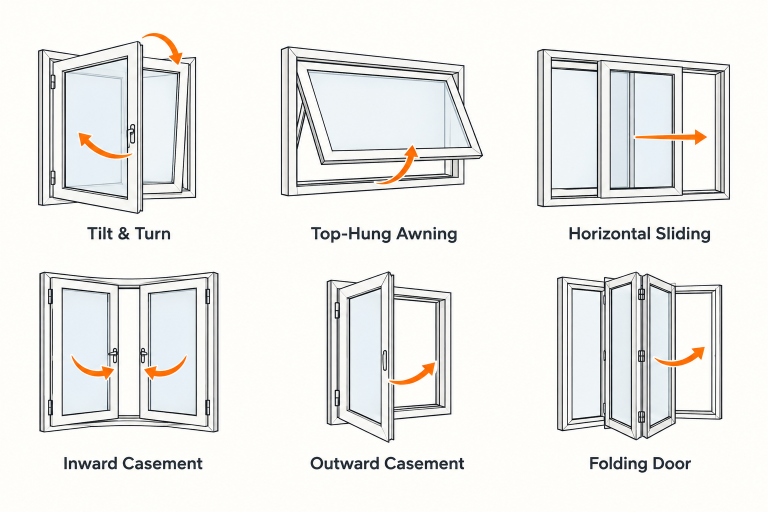
The quotation and drawing set should identify the openings, system codes, dimensions, opening directions, colours, glass, hardware, quantities and supply boundary. Open questions are recorded for resolution.
2 Materials are prepared against the order
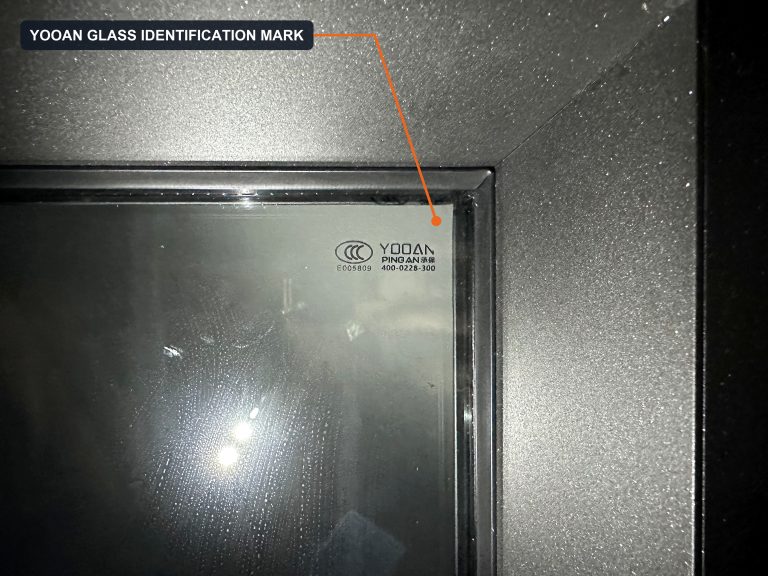
Profiles, glass, hardware, seals and other components are planned against the confirmed bill of materials. Availability and substitutions must be communicated rather than assumed. Project references help keep batches and opening numbers traceable during fabrication and packing.
3 Profiles and components are fabricated
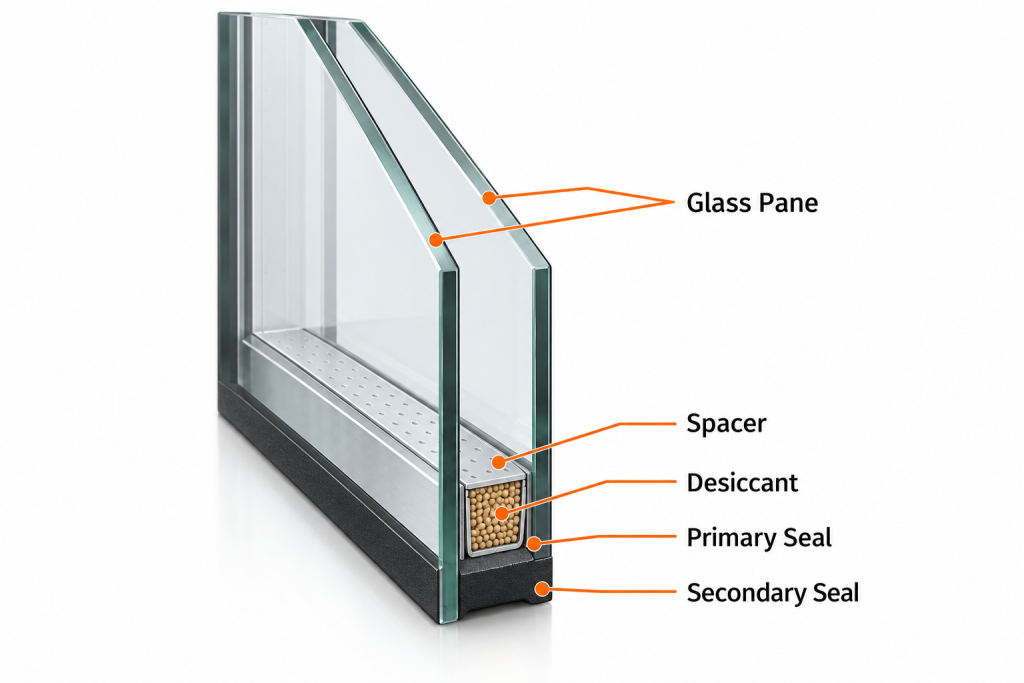
Cutting, machining and preparation follow the production information for the selected system. Operators check key dimensions and processing details at the relevant stages. The actual controls depend on the product, equipment and approved quality plan.
4 Frames and panels are assembled
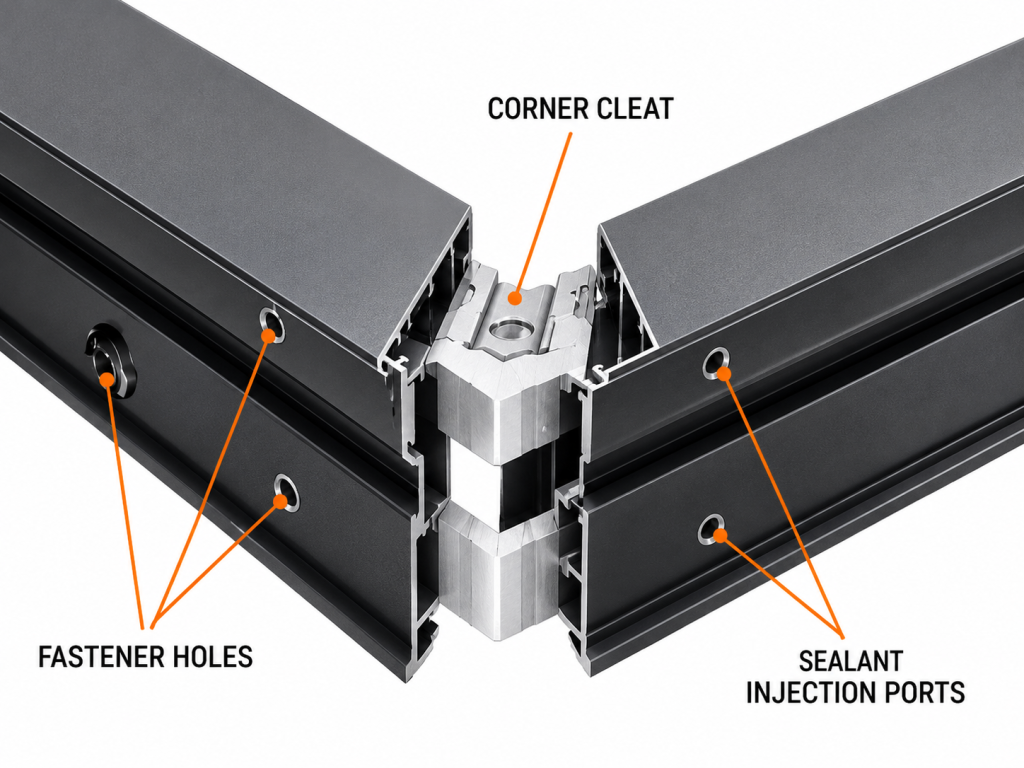
Components are assembled, glazing is completed where included in the supply scope, and hardware is fitted. Opening direction and item reference are checked against the order. Units that require adjustment remain in the production process rather than moving directly to packing.
5 The order is inspected
Inspection records should match the agreed scope. Typical checks may include identity, quantity, main dimensions, appearance and operation. A check confirms the inspected condition; it does not replace project-specific installation, local approval or on-site commissioning.
6 Items are labelled and packed for the route
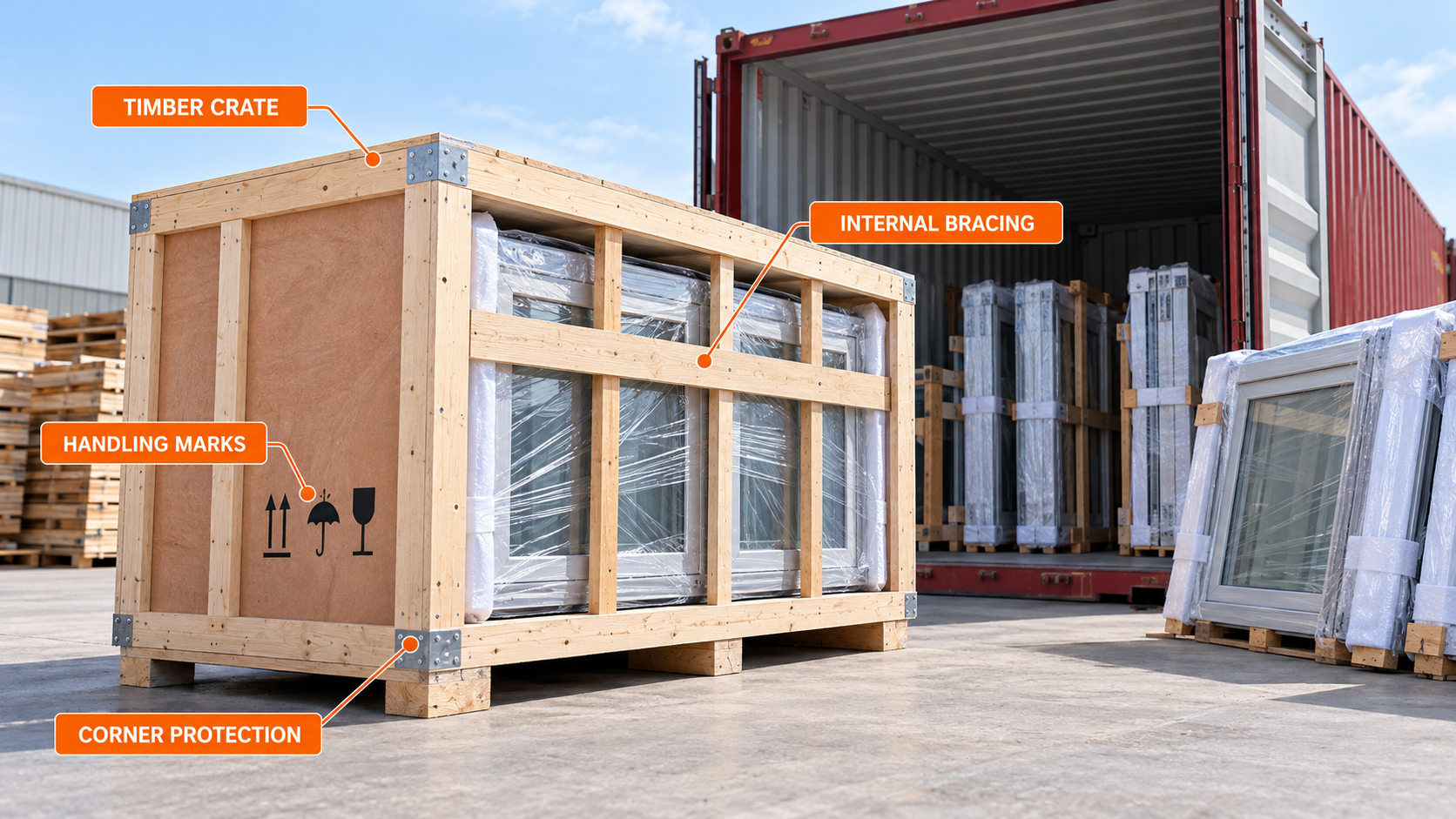
Each unit should be identifiable against the packing list and site opening reference. Protection and crate design are selected for the agreed transport method and handling plan. Loose hardware, documents and accessories are recorded so the receiving team knows where to find them.
7 Dispatch records complete the handover
The final packing list, shipment information and applicable product documents are shared according to the order. The receiving team should use those records to inspect the delivery and report discrepancies promptly.
For buyers, the most effective control is simple: approve one clear record, keep changes traceable, and confirm who is responsible at every handover—from drawing review to site installation.