A certificate, declaration or test report can support a purchasing decision only when its scope matches the question being asked.
Match the document to the question
| Document | What it may support | What it does not prove by itself |
|---|---|---|
| Management-system certificate | The named organisation and stated management scope | A performance value for a specific window or door |
| Product test report | Results for the identified specimen, method and conditions | Every size, glass, hardware or product family |
| Declaration or market document | The statements and scope written in that document | Acceptance in every jurisdiction or project |
| Project inspection record | The items and condition actually inspected | Uninspected units or work outside the recorded scope |
First identify the document type
Management-system certificates address how an organisation manages quality, environmental or occupational health and safety processes. Product test reports record results for identified samples under stated methods and conditions. Declarations and market-access documents serve other purposes. Read the title and stated scope before using any document as evidence.
Check six details
- Holder: Is the named company the same legal entity involved in the supply?
- Scope: Does the document cover the relevant activity, product family or model?
- Standard: Which edition or test method is referenced?
- Configuration: What size, glass, hardware and specimen were assessed?
- Dates: When was it issued, and is a validity or surveillance period stated?
- Issuer: Which certification or testing body produced it, and can the document be verified?
Do not turn a document into a broader claim
If a report records a result for one specimen, it should not be presented as a value for every product. Changes in dimensions, panel count, glass, seals or hardware may affect applicability.
The safest question is not “Do you have a certificate?” but “Which document applies to this exact product and project requirement?”
Use the document together with project records
For a specific order, connect the applicable document to the quotation, approved drawings and confirmed bill of materials. Ask the supplier to identify any limitation or item still awaiting verification. Where local regulations or a professional specification applies, the project team should confirm acceptance with the relevant authority or consultant.
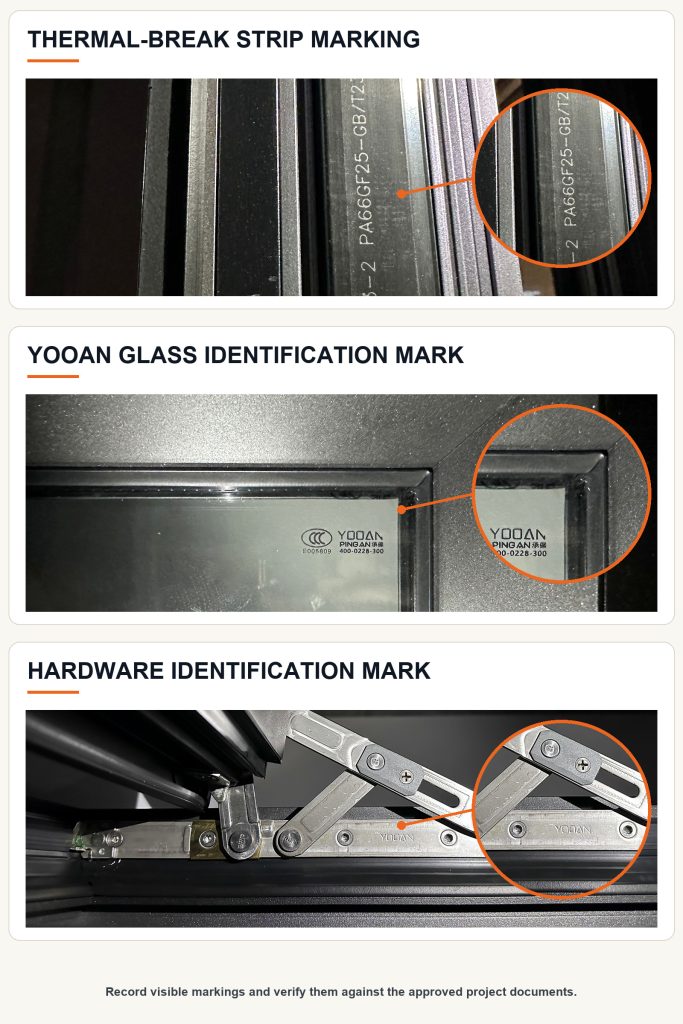
YOOAN’s public resource library keeps certificate records visible with their scope and status. An older record may remain useful as evidence of historical certification, but it should not be represented as current when renewal is required.